
Beyond Digitised Text: BookFusion’s Contributions to the Book Industry Study Group’s (BISG) Field Guide on Fixed Layout

A few years ago BookFusion contributed a chapter on JavaScript and interactivity to the Book Industry Study Group’s Field Guide to Fixed Layout for Ebooks. At the time, we were thinking deeply about what digital books could become if we pushed past the limitations of simply replicating print on screens. Today, as we work with partners across Latin America, the Caribbean, North America & Europe to bring advanced digital reading tools (ADTs) to students and educators, those early ideas about interactivity feel more relevant than ever.
Our work in exploring the bounds of the interactive epub format have lain the foundations for BookFusion to join a broader conversation about the future of education during a crucial era for edutechnology.
It’s worth revisiting what we learned then and what it means for where we’re going now.
The Promise That Never Quite Materialised
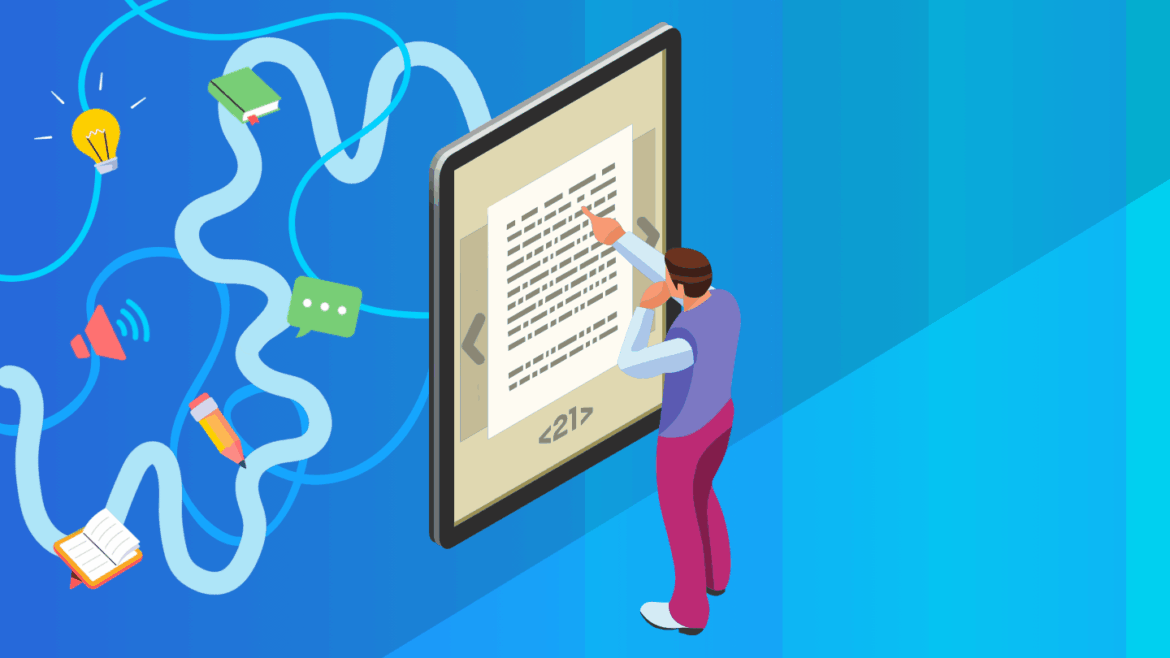
When EPUB 3 arrived with JavaScript support, it opened the door to genuinely interactive reading experiences. Imagine kindergarteners tracing letters that respond to their touch. Picture medical students manipulating 3D anatomy models embedded directly in their textbooks. Think about readers choosing their own narrative paths in fiction, with the story branching based on their decisions.
The technology has now existed for several years now. The specification supported it. But we are yet to see the publishing community and e-reading technologies fully adopt the possibilities into their ecosystems.
Reading systems so far have implemented EPUB 3 inconsistently. Some supported JavaScript fully, others partially, many not at all. As a result, publishers are understandably hesitant to invest resources in creating interactive content that might not work reliably across platforms. The result was a chicken-and-egg problem: readers couldn’t experience interactive ebooks because few were being made, and few were being made because support was uncertain.
“Sergey [CTO at BookFusion] and I thought PDFs would have been retired by now, but seems like the transition is really held back by our ability to imagine digital formats” — Dwayne Campbell, Founder
What We Learned About Interactivity
Our chapter in the BISG guide tackled this head-on. Rather than assume reading systems would implement every EPUB 3 feature, we outlined practical approaches for testing what’s actually supported. Using tools like Modernizr, borrowed from web development, we showed how content creators could detect JavaScript support, localStorage availability, SVG rendering, HTML5 video, even WebGL for truly immersive experiences.
The philosophy is progressive enhancement: build content that works everywhere, then layer on interactive features for systems that support them. A textbook might display static diagrams for basic readers but offer manipulable, animated versions where possible. A children’s book could show illustrations normally but enable touch-based games on capable devices.
But here’s what became clear through that work: this is more than a technical challenge. It’s a design challenge, an educational challenge, and ultimately a question about what we believe reading should be.
This means that we need more than developers to be able to envision the capabilities of fixed layout and interactivity. It is an intersectional exercise and must be introduced to teachers, designers and developers in training if we are ever to see the potential actualised.
From Theory to Practice
We’ve always rejected the idea that ebooks should merely replicate print. Digital reading has different affordances: searchability, linkability, portability, adaptability. Why wouldn’t we also embrace its potential for interactivity? Moreover, the power of the written word and physical paper has not changed with the invent of new tools. If we are to justify digising learning in any way, we must find ways to make it better than what we already have in order to make it worthwhile.
We built support for the kinds of enhanced ebooks we described in that BISG chapter. We wanted our users to experience what’s possible when JavaScript and rich media aren’t afterthoughts but core features. Whether it’s interactive math problems that provide immediate feedback, language learning books with pronunciation guides, or illustrated stories that come alive with animation, BookFusion was designed to handle these experiences the way their creators intended.
But supporting interactivity is one thing. Helping create ecosystems where it thrives is another.
A New Context: ADTs in Latin America and the Caribbean
Today, our work has expanded in scope and urgency. Through partnerships with educational institutions and governments in Latin America and the Caribbean, we’re helping bring advanced digital reading tools to students who are often underserved by traditional publishing models.
We believe interactivity to be far from ‘a nice thing to have’. Consider:
- Accessibility: All learners can access the same content regardless of ability, with features like text-to-speech, adjustable text and contrast, keyboard navigation, image descriptions, and sign-language or audio support that reduce barriers to learning and support inclusive classrooms.
- Language learning: Students learning in their second or third language benefit enormously from interactive pronunciation guides, embedded dictionaries, and multimedia explanations that go beyond static text.
- STEM education: Interactive diagrams, simulations, and manipulable models can make complex concepts accessible, especially when qualified teachers or laboratory resources are scarce.
- Engagement: In regions where students may be first-generation digital learners, interactive content can make the transition from print more engaging and less intimidating.
- Assessment: Embedded quizzes and interactive exercises allow students to test comprehension as they read, providing immediate feedback without requiring constant teacher intervention.
The infrastructure challenges are different here, bandwidth can be limited, devices vary widely in capability, but the fundamental insight remains the same: digital books should do more than mimic paper. They should leverage the medium’s full potential.

Beyond Development
Looking back at our BISG contribution, one thing stands out: standards matter, but only if they’re adopted. EPUB 3 had all the right features on paper, but fragmented implementation meant those features remained largely theoretical for most readers.
This is why our work with ADTs takes a different approach. Rather than wait for perfect standardization, we focus on building tools that work across the devices students actually have, using progressive enhancement to ensure core content is always accessible while enabling richer experiences where possible.
In addition to our development work, we partner with organisations like UNICEF, Project Star Jamaica, National Ministries of Education and more to put the tech into use and create awareness for the vision across disciplines. Without real world applications and the collective work together with experts in education and design, we won’t see lasting change or adoption.
Then lastly, we make the effort to contributing to industry conversations, like that BISG guide, because standards do eventually matter. As more publishers and platforms embrace interactivity, having documented best practices becomes crucial.
The Unfinished Work
All that being said, much work remains. The reading industry still hasn’t fully embraced what’s possible with interactive content. Many ebook platforms and curriculum planners remain stuck in a mindset that treats digital books as print substitutes rather than native digital experiences.
But the opportunity is enormous. As device capabilities improve, as bandwidth expands, as curricula content creators become more sophisticated about what’s possible digitally, the space for innovation grows. Last month we did a presentation with aspiring Special Education teachers in Kingston and led with this as the promise: The educators of tomorrow will be able to imagine and create accessible education EXPERIENCES, not just provide texts.
That’s the future we must all keep in view: tech working to solve real problems.
Moving Forward Together
The Field Guide to Fixed Layout for Ebooks was designed as a living document, regularly updated as technology and best practices evolve. That feels appropriate. The work of reimagining books for the digital age is an ongoing collaboration between technologists, educators, publishers, and readers.
We’re still in the early chapters of digital reading. The choices we make now about standards, about interactivity, about who has access to these tools will shape education and reading for generations. We’re committed to ensuring that future is rich, accessible, interactive, and full of possibilities for learners everywhere.
The BISG Field Guide to Fixed Layout for Ebooks represents collaborative work from across the publishing industry. BookFusion is proud to have contributed expertise on JavaScript and interactivity, helping document best practices for creating engaging, interactive digital content.
Experience the future of interactive reading:
📲 Download for Android
📲 Download for iOS
💻 Use on Web
Join the conversation on Discord: https://discord.gg/MkTJqZb9ev