Turn Any Book into an Audiobook:

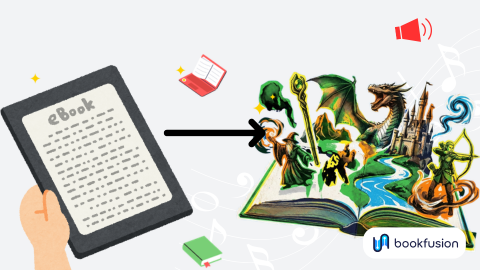
Can I turn my ebook into an audiobook?
Yes you can. With Bookfusion’s Realistic Voices Text-to-Speech (TTS), any book or article can now be turned into an audio, read-along-experience whenever you want!
Here’s the situation it was built for.
You want to listen to a book while commuting or running, and you go looking for the audiobook edition, and it does not exist. The book is too new, or too niche, or the author is independent, or it is a backlist title in a genre that audiobook publishers have not prioritised. You switch back to listening to a light podcast or other filler for your commute, and you have to make separate time to read. Most times, you end up not reading at all.
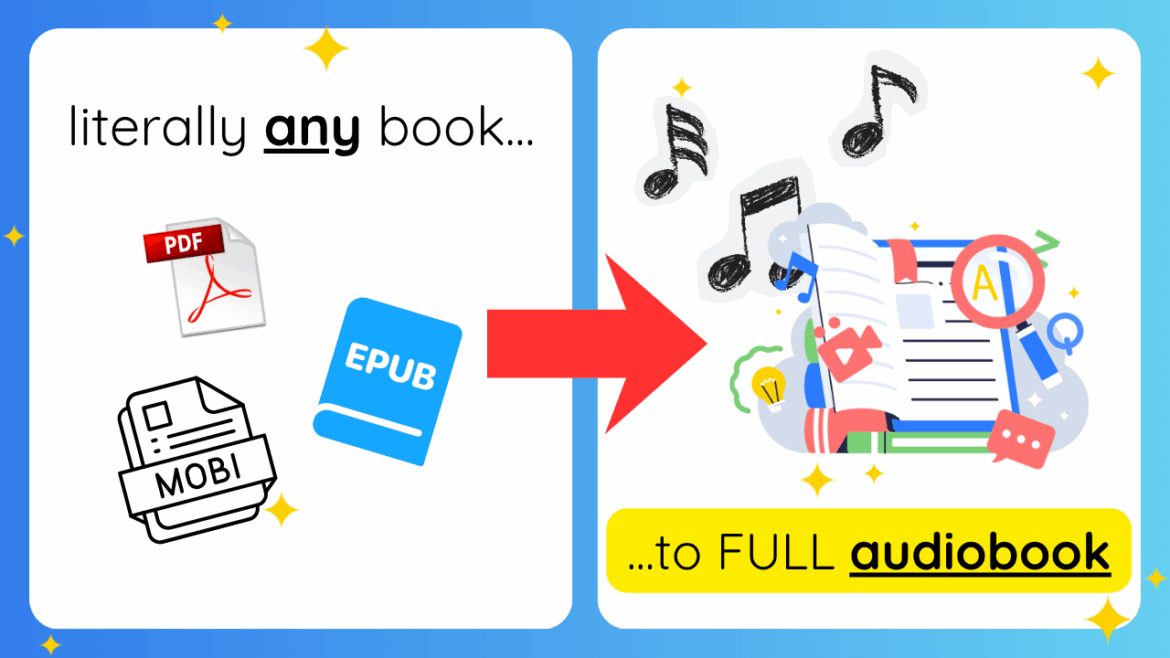
Power readers who discovered EPUB 3’s synchronised reading capabilities found a workaround, but it takes a hefty time investment. Using tools like Storyteller, which runs OpenAI’s Whisper model under the hood to auto-align audio to text, or syncabook for manual alignment, they would source or produce an audio recording, run it through a transcription and sync pipeline, correct the alignment errors, package the result in an EPUB 3 file using a tool like TOBI or Sigil, and then finally have a read-along experience.
When it worked, it was genuinely excellent and well worth the effort for many power readers. But alas, it remained a multi-step technical project for every single book.
That is, before we came in with our Realistic TTS: check it out below!
Try it out and see for yourself 😎:
📲 Download for Android 📲 Download for iOS 💻 Use on Web
Join the conversation on Discord: https://discord.gg/MkTJqZb9ev
Is there actually any difference between reading and listening along?
Listening to a narration while following the text is not the same as either reading or listening alone. Research on multimodal learning consistently finds that engaging visual and auditory processing simultaneously improves comprehension and retention compared to either channel used in isolation. The effect is especially significant for readers with dyslexia, those processing text in a second language, and anyone whose comprehension improves when they can hear rhythm and pacing alongside what they are reading.
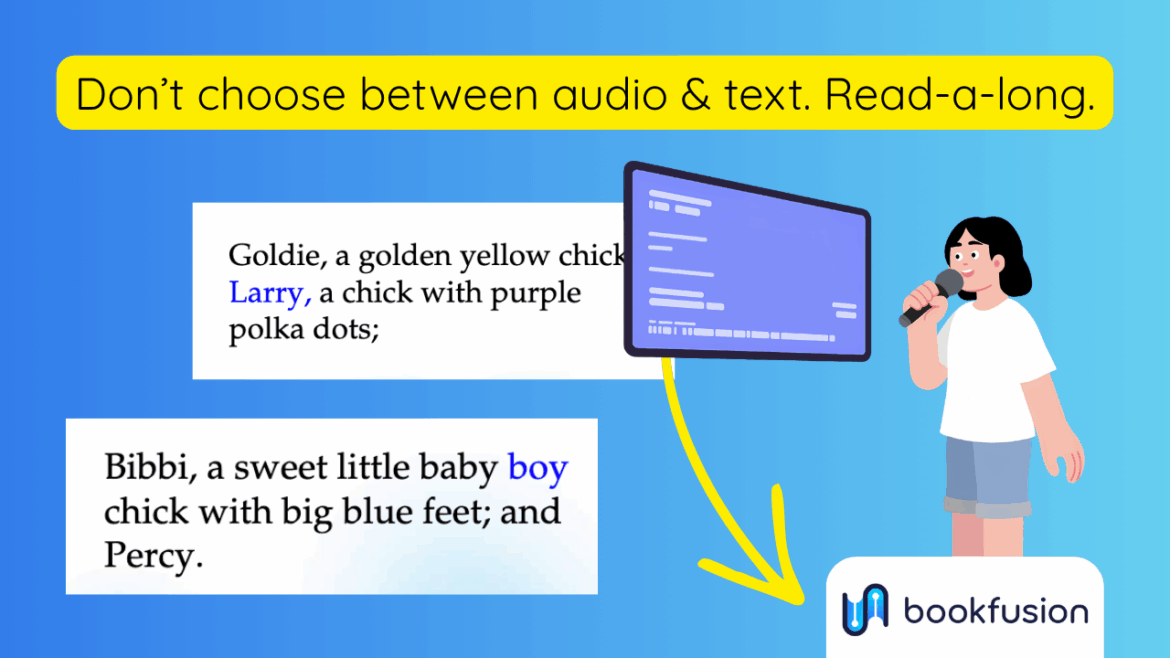
The synchronised read-along format is a direct implementation of that research. SMIL (Synchronized Multimedia Integration Language) maps audio clips to specific text fragments at the sentence or paragraph level, so the visual and audio track stay locked together regardless of reading speed or playback adjustments.
Power readers who put in effort to manually create these multi-media audiobooks knew this already. It’s important for the industry to pay attention to the habits of the average user to understand how to truly make meaningful additions to learning tools beyond the the hype features.
No More Robotic Voices
Text-to-Speech (TTS) has been around for a long time to assure accessibility to varying learning abilities but has always been a sad replacement for a human voice. The voice itself would be robotic, monotone, ignore punctuation and fail to pronounce proper nouns and common references.
With the application of AI voice models available now, prosody, natural pacing, and tonal variation are all possible. The experience of listening to a chapter is not tiring in the way earlier TTS was tiring. It is not the same as a human produced audiobook, but provides a strong alternative for anyone looking to listen to their content on the go, while doing an errand or read right along with the written words.
We’re also happy to produce a much better experience for those with disabilities who depend on tools like this.
Read also: Beyond Digitised Text: BookFusion’s Contributions to the Book Industry Study Group’s (BISG) Field Guide on Fixed Layout
The Distinction That Still Holds
Human narration and AI narration are not the same thing, and collapsing that distinction does not serve readers.
A skilled narrator brings interpretation: pacing decisions specific to the text, character voices developed across a full read, emotional weight that comes from a human understanding of the story. For books where that interpretation is central to the listening experience, a commissioned recording will carry something AI cannot replicate. Readers who love audiobooks for the performance dimension are right to keep seeking out those editions.
What AI narration provides is coverage. We can use AI Realistic Voices to serve the content that won’t ever garner their own complete, human production of an audiobook.
What we’d like to see is more publishers taking the hint, and producing ebooks that reflect the true wants of the users.
Experience the future of reading:
📲 Download for Android 📲 Download for iOS 💻 Use on Web
Join the conversation on Discord: https://discord.gg/MkTJqZb9ev